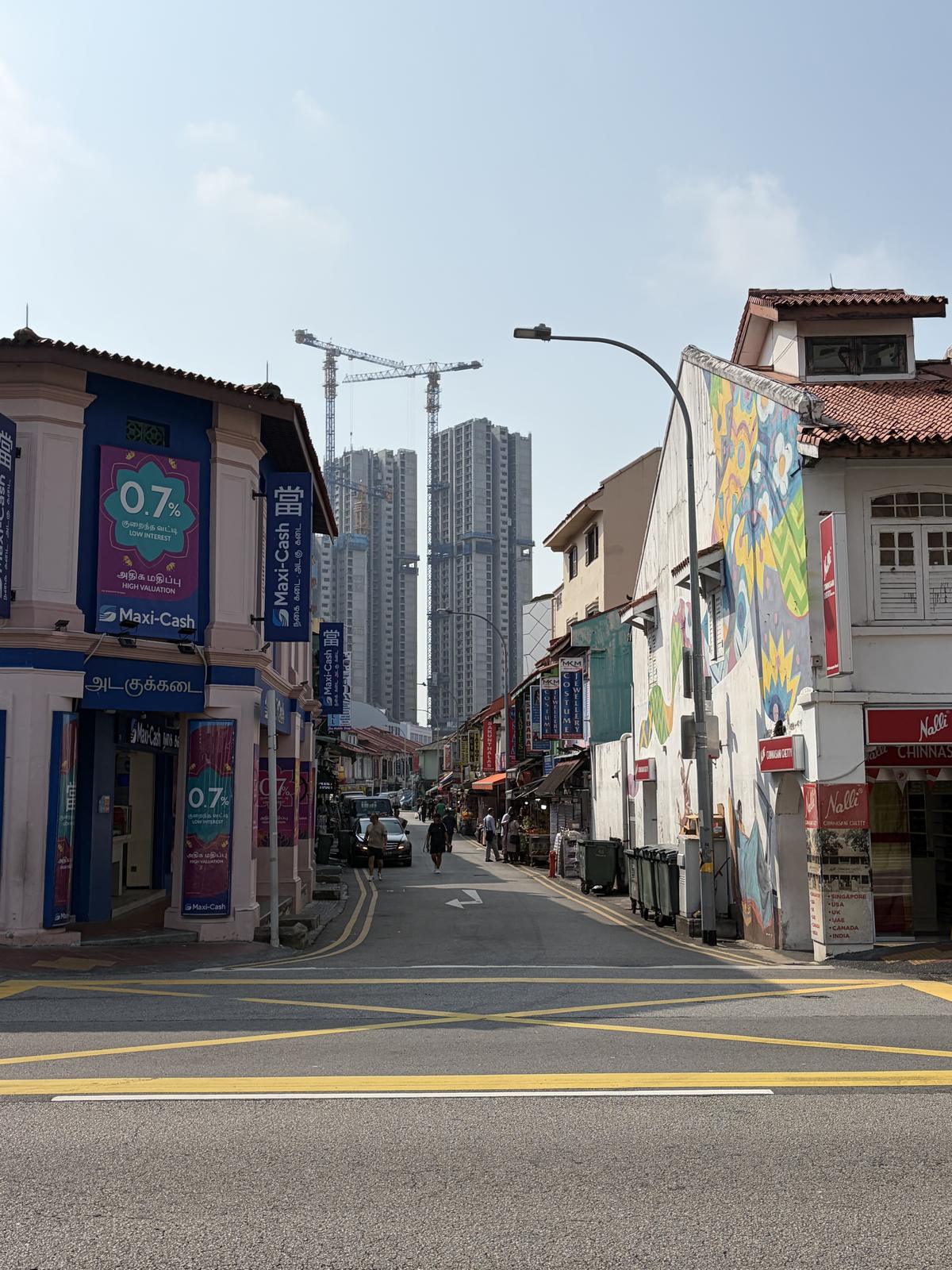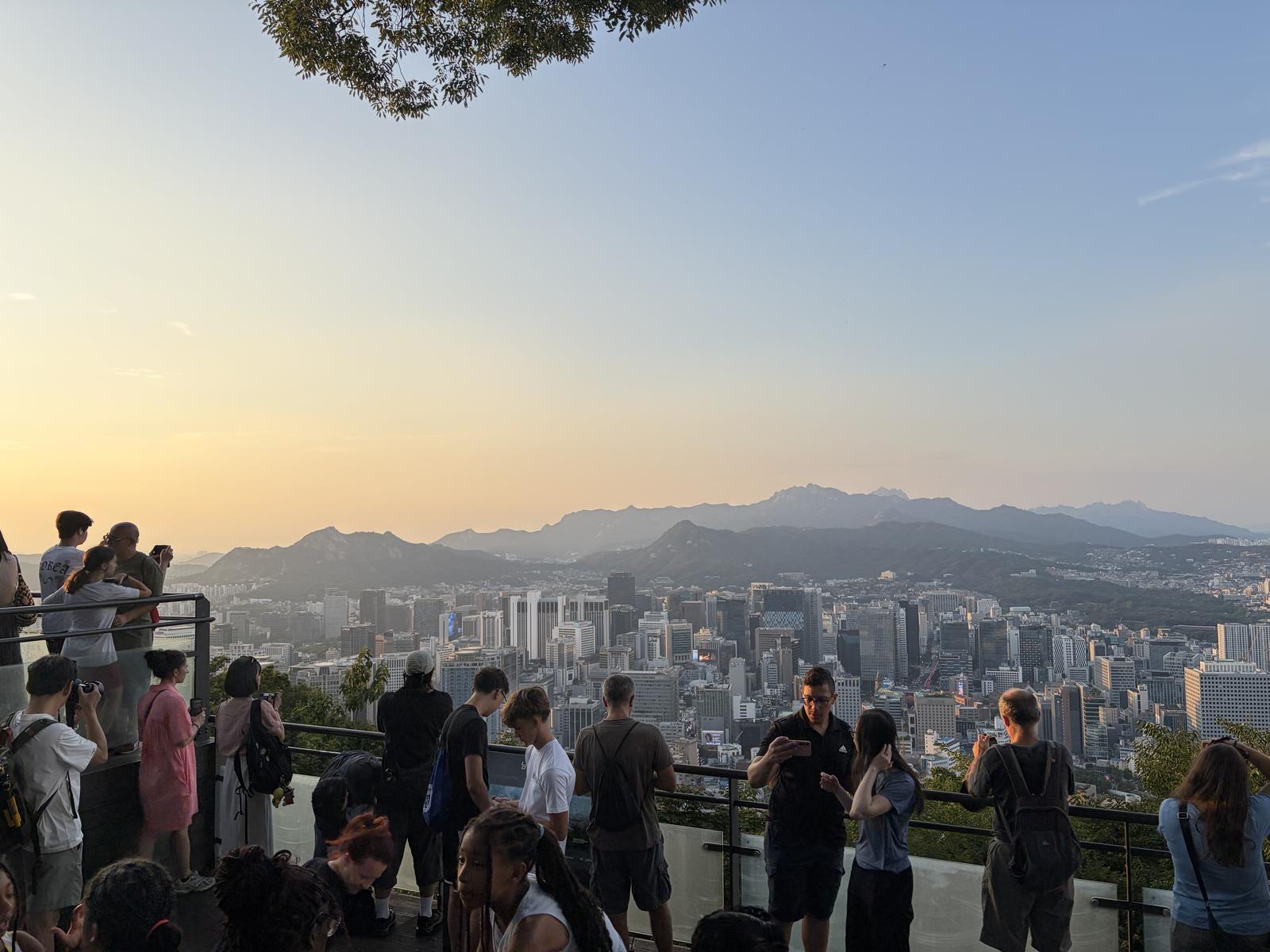
As I write, I am 4.5 hours into a 13.5 hour flight from Singapore to Frankfurt, the longest flight I’ve taken yet. I’m still processing the last few weeks: solo traveling around Asia has been a dream of mine for so long and I feel overwhelmed with gratitude that the stars aligned for me to have the free time, money, and energy to take on such an adventure. My only regret is that I didn’t do it sooner. I had so many moments on this trip where I thought, “Man, I love this now, but I wish 22-year-old Katie could have seen this too”. I hope that feeling will motivate me to seize more opportunities to travel going forward, rather than saving money towards some arbitrary financial goal. I suppose this trip is what I’ve been saving up for all this time, but I can’t help but think of all the incredible things I could have seen over the last few years if I had been more open to spending money and annual leave on experiences abroad.
I have so much to say about solo travel, transit, transportation, culture, and language. I think I will be processing this trip for many months and will continue to nurture my curiosity about the things I saw for years to come. I chose my itinerary for this trip based on the best metro systems of the world: Seoul, Tokyo, and Singapore being the gold standard for intracity heavy rail. They are regarded highly because of their punctuality, cleanliness, coverage, frequency, safety, and ease of use. Here are the things that stuck out to me most about my experiences in Seoul, Fukuoka, Kyoto, Tokyo, and Singapore:
Pedestrian Infrastructure & Traffic Management
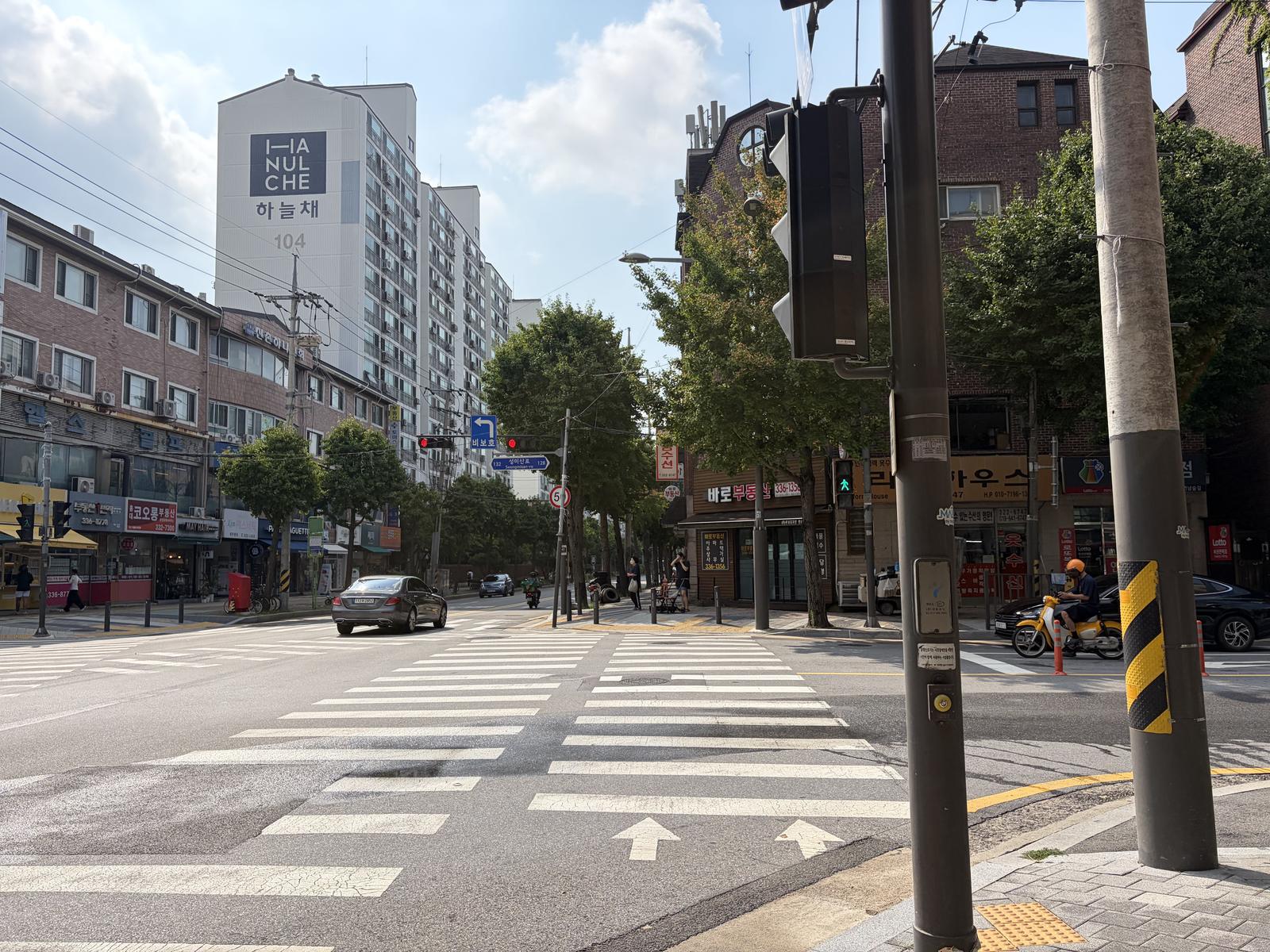
- In Seoul, many pedestrian crosswalks are separated by direction (i.e. crossing north -> south on the left and south -> north on the right)
- The coexistence of robust car infrastructure surprised me; waiting 50+ seconds to cross 6 lane freeways, elaborate highways and interchanges, areas of each city where there were no sidewalks with sort of a vibes-based traffic management pattern. I still don’t really know how I feel about these streets - the cars never moved fast enough that it felt like the pedestrians were in danger, but there were a lot of moments where it felt like these streets should really be car-free.
- On the point above - I saw many more cars parked on the street in Korea than in Japan and learned that in Japan, in order to buy a car, you need to prove that you have a place to park the car that is not on the street. Similarly, in Singapore, the car registration often costs more than the car itself; I heard figures around the 80,000SGD - 100,000SGD range (~$62,000 - $78,000) just for the license plate itself.
- Korea and Japan often had countdown timers for pedestrian crossings, both for time remaining to cross and time remaining to begin to cross. I loved knowing how long I would need to wait to cross the street and it made me feel less inclined to jaywalk. These timers rarely displayed the number of seconds, but rather a visual representation of time diminishing on the pedestrian signal (in Korea, usually a vertical stack of green triangles, with the green triangles disappearing from top to bottom. In Japan, a vertical stack of lines segments with the segments slowly disappearing from top to bottom)
- Singapore did not have the pedestrian countdown timers which made standing and waiting to cross feel a lot longer than it likely actually was. However, what Singapore did have was concrete awnings permanently lining most sidewalks - this serves the primary function of keeping the sidewalks shaded as well as providing rain cover.
Transit
- At busy stations in Korea and Japan, fare gates were left open by default and would only close if they detected a problem with fare payment.
- Korea and Japan required the use of T-money and Suica cards, respectively. These are cards you can add to your Apple wallet and scan at the fare gates using your phone. In Singapore you can use your any contactless payment method.
- Fares in Seoul varied from 1,200 KRW ($0.87) to 3,100 KRW ($2.26). The typical metro ride was 1,550 KRW ($1.13) and the average bus ride was 1,200 KRW ($0.87), but this varied a lot depending on the distance of the ride. In total I spent about 30,000 KRW ($21.83) on transit in Seoul over 5 days.
- I loved that I could use Suica across Fukuoka, Kyoto, and Tokyo transit. Most metro and bus fares were between 199 JPY ($1.24) and 317 JPY ($1.98), though my train to Narita airport was 1,194 JPY($7.46). I spent about 5,200 JPY ($32.47) in total on transit throughout my 9 days in Japan. This does not include my two trips using the Shinkansen which were 30,550 JPY ($195.96) in total.
- As previously mentioned, I used my credit card to pay for transit in Singapore. The only downside here is that when your card is charged, it is charged in aggregate, so the fare breakdown is difficult to parse out if you took more than one trip in a day. I spent $16.32 on transit in Singapore which I think breaks down to roughly $2.28 per trip, though I do think this differs between metro and bus.
- Seats on the metro were made of hard plastic in Singapore whereas they were typically covered in fabric in Korea and Japan.
- Apparently Seoul uses surveillance data (wifi routers + transactions) to update bus routes. This made me think a lot about the tradeoff between privacy and efficiency.
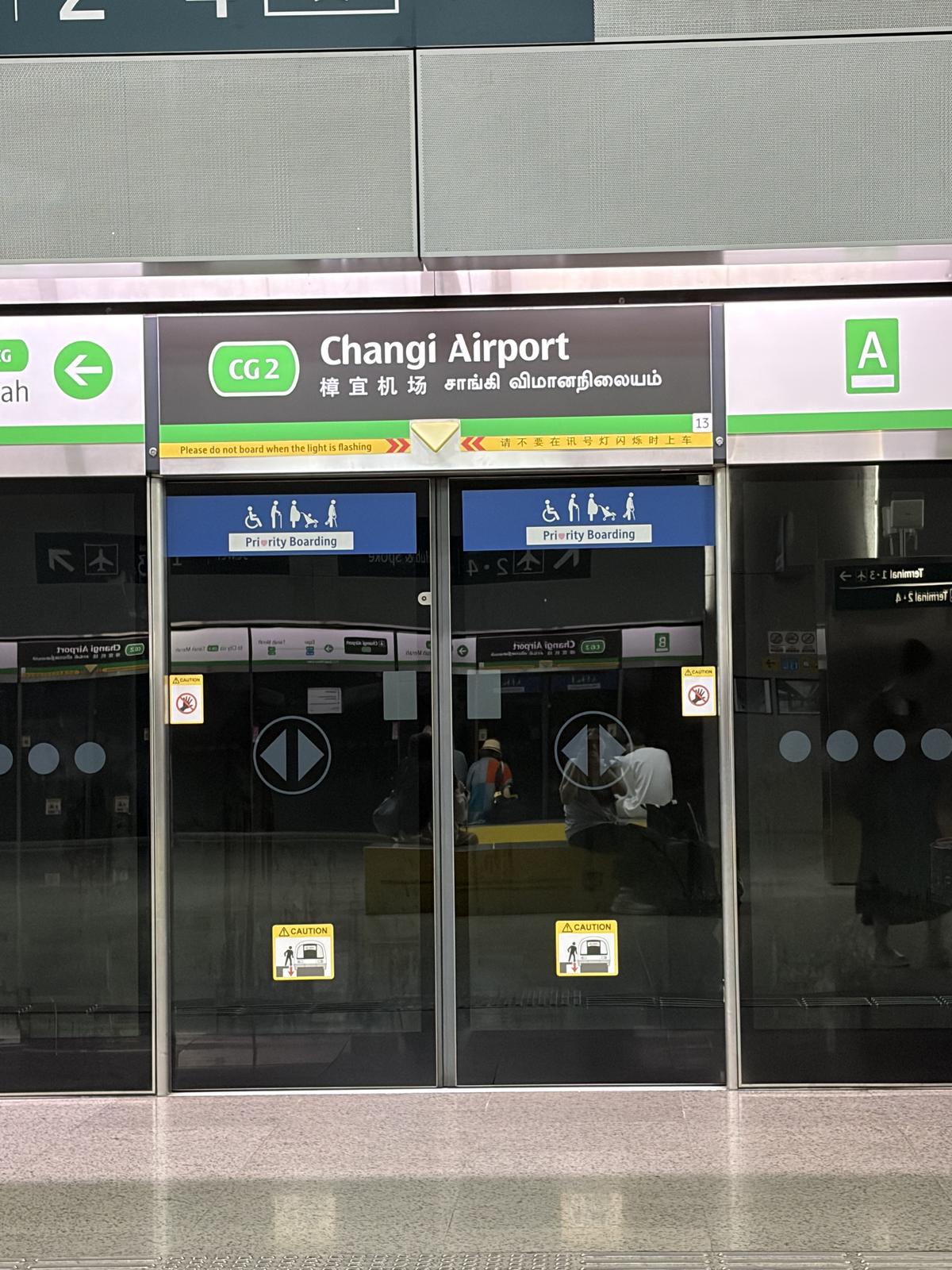
- Every metro station in Seoul had platform-screen doors. There are five major benefits to platform screen doors. (1) Users are prevented from throwing trash onto the tracks, improving station cleanliness and train functionality (2) Reduces the noise of incoming trains (3) Reduces the overall temperature of the station and therefore cooling costs (4) Users can anticipate where people are coming off when boarding which reduces dwell time and thus decreases delays. And, most importantly, (5) Effectively reduces user fatalities to zero.
- In contrast, Japanese trains had half-platform screen doors. In Singapore, most stations had full platform screen doors, but some only had half.
- Everywhere I went, there was a deep respect for public transit, engrained in the culture of its users. On every system, I witnessed zero eating or drinking on the trains or in the station. People wore their backpacks on their front during rush hour, left open seats reserved for the elderly and pregnant, refrained from speaking on the telephone or speaking loudly, if at all.
- In Japan, there was a prescribed physical arrangement that I didn’t see in Korea or Singapore: when boarding the train, if all the seats were taken, riders would create two standing rows, both facing the seats, so there were effectively four rows of people in a metro car: two sitting and two standing. Almost everyone was staring at their phone. Occasionally you would see someone reading. I guess it makes sense to be entertained if you won’t speak to anyone, but sometimes being on the metro in Japan made me really sad - how lonely and isolating to be surrounded by hundreds of other people yet experiencing complete silence.
- I rode the bus a lot in Korea. It was always on time. You tap your T-money card when you enter the bus from the front and tap again when you leave from the back. They had a very similar arrangement in Singapore.
- In Kyoto it was actually the opposite, you load the bus from the back and do not tap your Suica card until you leave the bus from the front.
- Other than buses, surface transit was generally not an option. I don’t think I saw a single tram my entire trip, which is a shame since it’s my favorite form of transit.
- On every system, there were jingles before the subway arrived. In Korea, the type of jingle indicated the direction of the incoming train.
- There are three major private rail companies in Japan and over 130 private rail operators in total across the country. In Tokyo, the metro system is a mix of private and publicly operated lines. Tokyo Metro operates 9 lines and is a publicly traded company. Toei Subway is run by the Tokyo Metropolitan Government and operates 4 lines. Until recently, you needed separate rail cards to use the lines provided by each (the equivalent of having one card for the yellow, green, and red lines, another for the silver, blue and orange in DC). Seoul and Singapore metro are both fully public.
- These systems (Seoul Metro, Tokyo Metro/Toei Subway, and Singapore MRT) are hailed as great for a reason; they are impeccably clean, there are rarely delays, the headways are 2-3 min during rush hour and 5-6 min otherwise. The really incredible aspects of these systems are things I didn’t even get the chance to experience, specifically the insanely fast commuter rail in Seoul that is fully integrated with the rest of the metro system.
Other Observations
- Clean and abundant public bathrooms. At the very least, every city I visited had public bathrooms available at every metro station. They were always clean and there was clear signage pointing towards their location. In Korea and Singapore these tended to be available before the fare gates, but in Japan I noticed they sometimes were restricted to behind the fare gates.
- Every station and train car had air conditioning (if the AC is too strong you could decide to ride in one of the “lightly air conditioned” cars). All of my accommodation in Korea and Japan had air conditioning units - my hostel in Singapore was the only place I stayed that had central air.
- In Korea, there were always free bathrooms at public parks and markets. Really any time I needed a bathroom in Korea there was one right in front of me. This made me realize just how much bathroom stress influences my decisionmaking in urban environments in the US/Europe.
- If there were not multiple cafes or convenience stores in a given metro station, there would certainly be multiple vending machines. This is somewhat puzzling as I never witnessed eating or drinking on the train.
- In Japan, I often wondered where people were consuming their 7/11 coffees as you are not allowed to consume inside the store and it is uncommon to drink or eat on the street, whereas in Korea and Singapore you were encouraged to sit and consume your purchases in-store. I spent a lot of time on this trip thinking about how often I drink and eat while walking. A few years ago I was living in Amman during Ramadan - a time when it is actually illegal to drink and eat in public during the day. It surprised me then how difficult of a habit this was to break and surprised me again this past month.
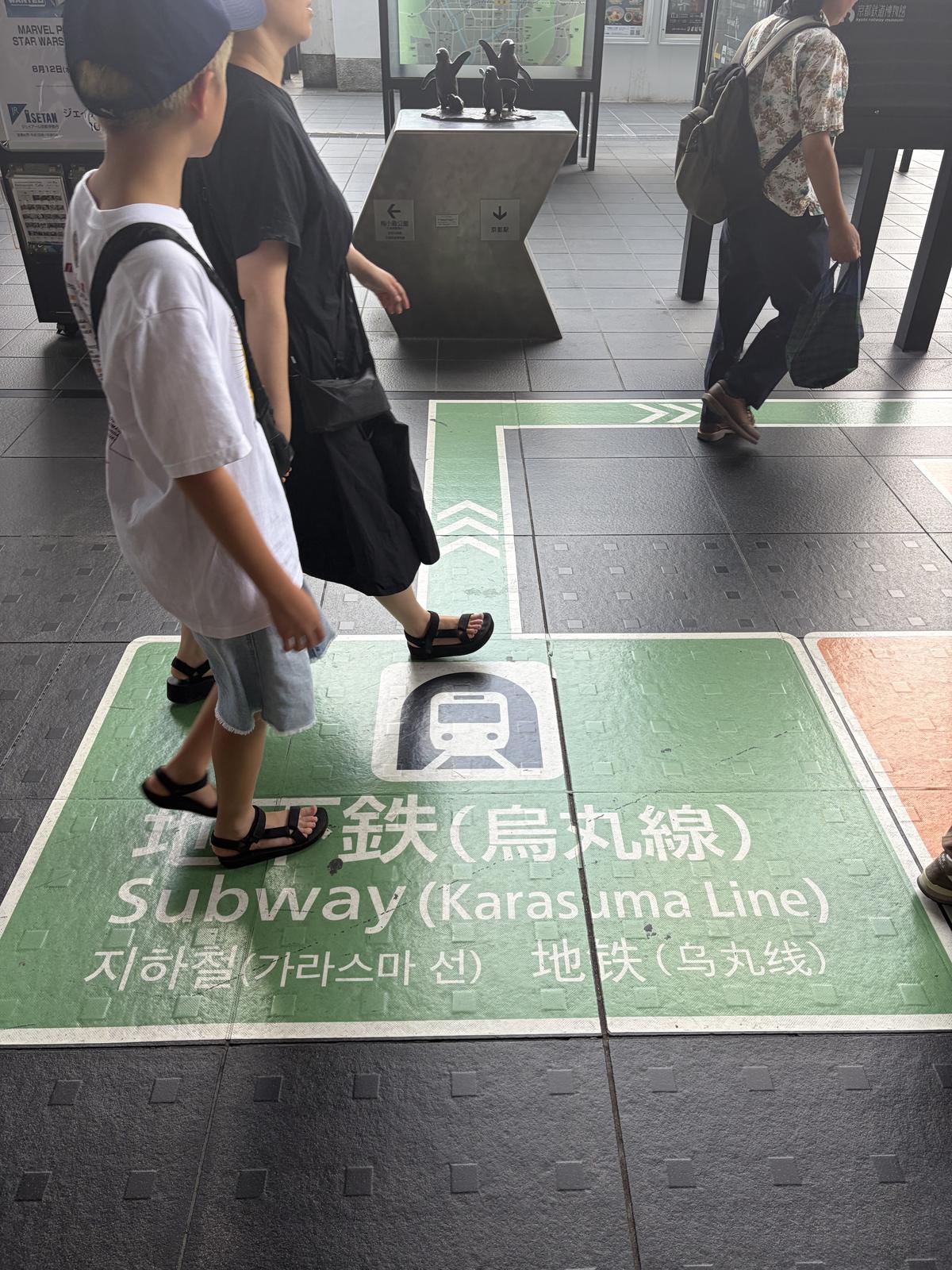
- In general, the places I visited had way better wayfinding than what I have experienced elsewhere. Many of the stations I encountered were massive. For example: Shinjuku station in Japan moves more than 3 million people per day and has over 200 exits. In most Japanese train stations with JR, Shinkansen, and metro trains, there are arrows on the floor directing users between the different areas of the station serving each rail format. Exits are numbered and they align with Google Maps.
- I can’t say I ever used Google Maps in DC, but I know for a fact that our metro exits are not numbered. One of my biggest planning takeaways from this trip is that American systems can be doing way more to make their rail systems more user-friendly. It is embarrassing that I could easily navigate systems mostly in Korean and Japanese, but struggle to find my way into and out of L’Enfant plaza sometimes.
- If you plug your journey into Google Maps (or Naver Maps in Korea), you will get step by step directions down to the optimal train car to embark for the easiest transfer/exit.
- In Korea, there was a really high concentration of cafés which I loved. I also loved being able to pop into any convenience store and make a quick iced coffee with the bags of iced black coffee and cups of ice. The density of convenience stores in Japan and Singapore was similar, but the coffee and café culture really does not compare.
- Massive - and I mean massive - apartment building developments. These are dense and incredibly populous cities. Coming from DC, it was wild to be in places that sprawled with density rather than single-family homes.
- I did not bike in any of these cities, though I did consider it. Korea and Singapore both had cycle share programs, but I didn’t notice any in Fukuoka, Kyoto, or Tokyo. I noticed lots of cyclists in Tokyo, especially in Koto City where I was staying. It’s an incredibly flat city which makes it great for cycling, but I was pretty disappointed in the cycling infrastructure. I similarly noticed a decent amount of cyclists in Singapore but very few bike lanes.
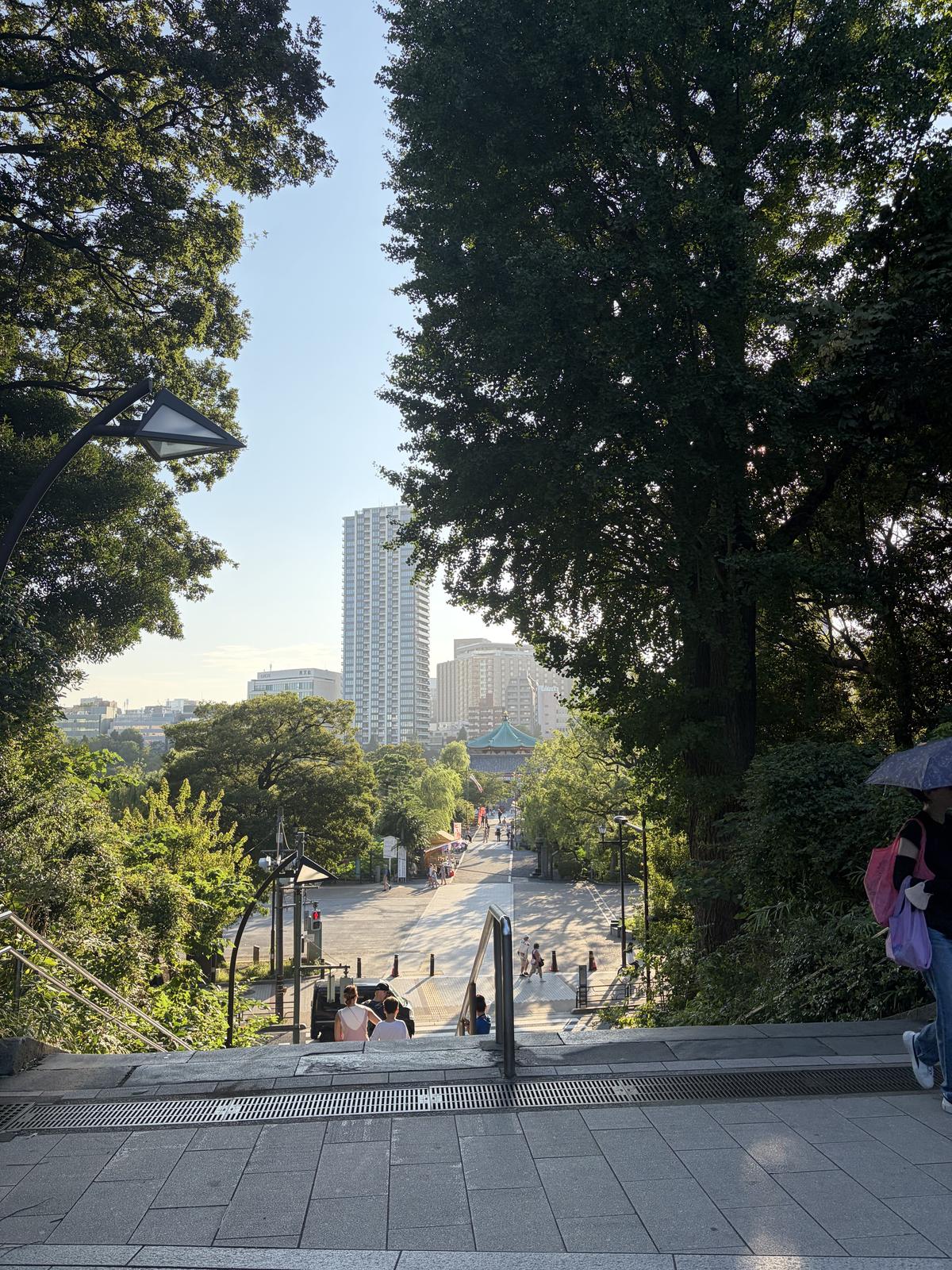
Of everything I noticed, the Wayfinding and user traffic management are what stand out to me as being far superior to American systems. Especially in the megacities of Tokyo and Seoul, there are procedures in place to gently steer millions of people a day through a transit system. The more I think about it, the more impressive it becomes. I wish a lot of these elements were more common in the US (labeling where the train will stop, where people should stand to allow people to get off, numbering exits, etc).
I’m moving to London next week (!!) and am excited to explore that metro system further, especially with the context of this recent trip. The London Underground is the world’s oldest subway system and often makes the same “Top 10” metro systems lists that Seoul, Tokyo, and Singapore do, but if my memory serves, I think this has to do with historical significance rather than modern marvels of engineering, cleanliness, and reliability. Though, I have a feeling I won’t be riding the Tube much in London…